


Back to School Budget Canada: Smart Tips for Every Province
Klyrr Team · Aug 7, 2026 · 25 min read
Table of contents
- A Relatable Canadian Money Moment and Why This Guide Exists
- Canadian Households in 2026 (CAD, Provinces, Real Life)
- Video: Canadian Education Planning: RESP, CESG Grants \u0026 The $7,200 Free Money Strategy
- Trusted Sources (CRA, canada.ca, banks, FCAC)
- Practical Strategies with Real CAD Examples (Part 1)
- Next-dollar priorities, habits, and a week-by-week plan (Part 2)
- English + French terms Canadians search (TFSA/CELI, RRSP/REER, FHSA/CELIAPP)
- Bank Sync, Receipt Snap, and Why Spreadsheets Fail
- The Power of Automatic Bank Sync
- Why Receipt Snapping Complements Bank Sync
- The Shortcomings of Spreadsheet Budgeting
- Practical Steps for Busy Parents in Major Cities
- Real Canadian Savings Examples
- Collaborative Budgeting Conversations
- Addressing Inflation in the Back-to-School Budget
- Tools for Canadians Post-Mint
- What to Do Today, This Week, and This Month
- Ten Detailed Questions Canadians Actually Ask
- How Much Should I Budget for Back-to-School Expenses in Canada?
- What Are the Biggest Mistakes in Back-to-School Budgeting?
- How Can I Make the Most of the CESG for My Child's RESP?
- How Does Inflation Affect My Back-to-School Budget?
- What Tools Can Help Me Budget for Back-to-School Expenses?
- How Do I Balance Back-to-School Costs with Everyday Expenses?
- How Can I Save Money on School Supplies in Ontario?
- What Should Couples Discuss About School Budgets?
- How Does Automatic Bank Syncing Improve Budgeting Compared to Spreadsheets?
- How Can I Plan for Quebec’s Rentrée Scolaire Budget?
- Secure Bank Connect, AI Insights, and Your Free Next Step
- Quick comparison: old way vs Klyrr way
1. A Relatable Canadian Money Moment and Why This Guide Exists
As the summer days slowly give way to the crisp air of September, Canadian families across the provinces face a familiar financial challenge: back-to-school shopping. Whether you're in bustling Toronto, culturally vibrant Montréal, or the scenic landscapes of Alberta, the annual tradition of preparing for the new academic year is both exciting and daunting. From purchasing school supplies to updating wardrobes, the expenses can quickly add up, leaving many parents wondering how to manage their back-to-school budget effectively.
a. Understanding the Canadian Context
In Canada, the cost of back-to-school shopping can vary significantly depending on where you live. According to the Financial Consumer Agency of Canada, creating a detailed budget is crucial to managing household expenses during this period. On average, Canadian families spend hundreds of dollars on school-related items each year, with costs further influenced by provincial differences and inflation rates. For instance, a family in Ontario might allocate a different amount than one in Québec, not only due to varying prices but also due to local educational requirements.
b. Common Pitfalls and How to Avoid Them
One of the biggest mistakes Canadian families make is not planning ahead. Without a budget, it's easy to overspend on non-essential items. The Bank of Canada highlights how inflation can affect household purchasing power, making it essential to be strategic about spending. Another common error is neglecting the potential for RESP (REEE) contributions. Many parents miss the opportunity to catch up on unused RESP contribution room, which could maximize their child's education savings through government grants.
c. Practical Steps for Busy Parents
So, how can busy parents in Toronto or Montréal get ahead this year? Start by setting a clear budget. Use tools like the federal budget planner to outline your expenses. Consider connecting your Canadian bank for automatic transaction sync, which can streamline your budgeting process compared to manually inputting data into spreadsheets. Klyrr, a Canadian app, offers secure bank connections that can help you track every coffee and school supply purchase without the hassle of monthly CSV downloads. Learn more about how Klyrr can simplify your financial planning here.
This guide exists to help Canadian families navigate the back-to-school season with confidence, offering strategies tailored to provincial differences and practical tips for maximizing your budget. Whether it's snapping receipts at checkout to capture cash spending or using AI tools for budget recommendations, our aim is to ensure that every dollar is spent wisely, leaving room for RESP contributions that can benefit your child's future education.

2. Canadian Households in 2026 (CAD, Provinces, Real Life)
In 2026, managing a back-to-school budget is critical for Canadian households, especially as families balance everyday expenses with long-term savings goals like the RESP (REEE) catch-up. With the cost of living varying significantly across provinces, understanding these differences and planning accordingly can make a substantial difference in financial health.
a. The Provincial Cost Landscape
The cost of living in Canada is not uniform, and this is particularly evident in back-to-school expenses. In Ontario, for example, families may find themselves spending more on school supplies and extracurricular activities due to the higher cost of living in urban areas like Toronto. Meanwhile, in Québec, costs might be slightly lower, but parents often juggle these expenses with the need to contribute to an RESP, aiming to maximize the Canada Education Savings Grant (CESG).
Inflation continues to challenge household budgets across provinces. According to the Bank of Canada, inflation impacts purchasing power, making it crucial for families to plan their budgets carefully. The FCAC suggests creating a detailed budget to manage these fluctuations and avoid financial strain.
b. Common Budgeting Pitfalls
One of the biggest mistakes Canadian families make is underestimating the cumulative costs associated with back-to-school shopping. School supplies, new clothing, and technology for remote learning can add up quickly. In many cases, families also overlook the importance of setting aside funds for educational savings plans like the RESP, which can lead to missed opportunities for free government grants such as the CESG.
c. Practical Steps for Busy Parents
For parents in busy cities like Toronto or Montréal, practical budgeting steps are essential. Begin by reviewing last year’s expenses and adjusting for inflation. A simple strategy could be allocating $85 for a grocery run and $62 for a gas fill-up, ensuring these routine costs are covered before tackling school-related purchases.
Parents should consider using tools like the FCAC Budget Planner to track spending. Additionally, connecting your bank account for automatic transaction sync can streamline the budgeting process, as it removes the need for monthly spreadsheet updates. This ensures every coffee, lunch money, or school fee is accounted for without the hassle of manual tracking.
d. Leveraging Technology for Budgeting
Apps like Klyrr offer a seamless way to manage back-to-school budgets by allowing families to snap receipts at checkout, capturing every expense in real-time. This method, combined with automatic bank transaction synchronization, provides an accurate picture of spending, helping families to stay within their budgets and identify areas where they could save.
e. The RESP Catch-Up Opportunity
For those who find themselves with unused RESP contribution room, catching up is not only possible but financially rewarding. The CESG provides a 20% match on the first $2,500 contributed annually, up to a lifetime maximum of $7,200 per child. By prioritizing these contributions during the back-to-school period, families can take full advantage of this government incentive.
Planning for back-to-school expenses while managing long-term savings goals requires a strategic approach. By understanding provincial cost differences, avoiding common pitfalls, and leveraging technology, Canadian families can navigate the financial demands of the season with greater ease and confidence.
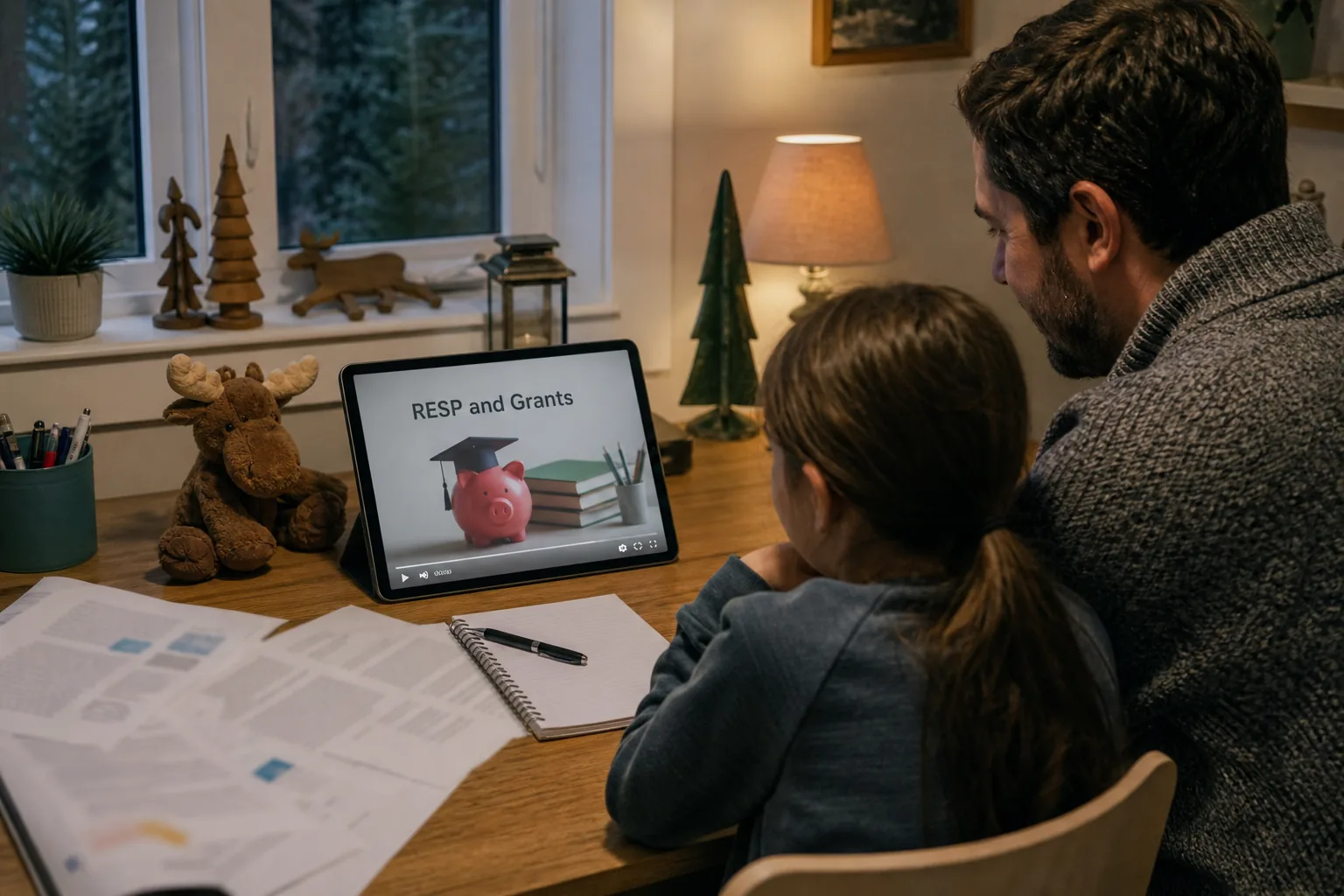
3. Video: Canadian Education Planning: RESP, CESG Grants \u0026 The $7,200 Free Money Strategy
Watch this overview, then apply the steps below with your own receipts and accounts.

4. Trusted Sources (CRA, canada.ca, banks, FCAC)
When it comes to managing your back-to-school budget in Canada, turning to trusted sources is essential. The official guidelines from institutions like the CRA, canada.ca, and the Financial Consumer Agency of Canada (FCAC) provide invaluable information to help Canadian families navigate this annual financial challenge. Additionally, insights from major banks such as TD, RBC, Scotiabank, BMO, and CIBC can offer practical advice tailored to Canadian households.
a. Government Resources for Budgeting
The Financial Consumer Agency of Canada (FCAC) provides a wealth of information on creating and sticking to a household budget. Their resources emphasize the importance of setting realistic financial goals and tracking expenses, which is crucial during the back-to-school season. The FCAC's budget planner tool is particularly helpful, enabling Canadians to input their income and expenses to gain a clear picture of their financial situation. This tool can be especially useful for parents looking to balance school-related costs with other household expenses.
b. Bank of Canada's Insights on Inflation
Understanding how inflation impacts your budget is critical, especially when planning for back-to-school expenses. The Bank of Canada offers insights into how inflation affects household purchasing power. With inflation influencing the cost of school supplies and clothing, staying informed can help you anticipate price changes and adjust your budget accordingly. By considering these factors, you can allocate funds more effectively and avoid financial strain.
c. Guidelines from Canadian Banks
Major Canadian banks such as TD, RBC, Scotiabank, BMO, and CIBC offer tailored advice for managing back-to-school costs. For instance, TD Bank recommends setting a specific budget for school supplies and sticking to it, while also considering second-hand options or discounts to save money. RBC highlights the importance of involving children in budgeting discussions to teach them financial literacy from an early age. By leveraging the tools and advice provided by these banks, families can better prepare for the back-to-school season.
d. RESP Catch-Up Strategies
The Canada Education Savings Grant (CESG) is an essential component of the Registered Education Savings Plan (RESP). It matches contributions up to a certain limit, providing a significant boost to your savings. If you've missed contributions in previous years, catching up can maximize your CESG benefits. This is particularly important as education costs continue to rise. Planning and making regular contributions can ensure you take full advantage of government incentives.
e. Practical Steps for Families
Canadian families can take practical steps to manage their back-to-school budget effectively. For instance, a $85 grocery run at No Frills or a $62 gas fill-up at Petro-Canada can be planned into your monthly budget. By using tools like Klyrr's automatic bank sync, you can track your spending in real-time, ensuring you stay within budget. Additionally, snapping receipts at checkout provides a seamless way to record cash purchases, complementing digital transaction tracking.
f. Conclusion
Navigating the back-to-school budget in Canada requires careful planning and the use of reliable resources. By leveraging the guidelines provided by the CRA, FCAC, and major banks, along with employing practical budgeting tools, Canadian families can manage their finances effectively. As you prepare for the school year, remember to explore all available resources and strategies to optimize your budget and ensure a smooth transition back to school.
5. Practical Strategies with Real CAD Examples (Part 1)
a. Understand Your Provincial Context
When it comes to back-to-school budgeting, understanding the specific cost dynamics in your province is crucial. For instance, families in Ontario might spend differently compared to those in Québec due to varying costs of living and educational expenses. According to the Financial Consumer Agency of Canada, creating a tailored budget that accounts for provincial differences can make a significant impact on your financial planning.
In Ontario, the average back-to-school expense can reach upwards of $500 per child, including supplies, clothing, and extracurricular activities. In contrast, families in Québec might find costs slightly reduced due to different school supply requirements and provincial subsidies. By analyzing these provincial variations, you can better allocate your funds and ensure you have room for unexpected costs.
b. Leverage Automatic Bank Sync for Real-Time Insights
Connecting your Canadian bank via a secure platform like Klyrr can transform your budgeting process by providing real-time insights without the hassle of manual data entry. With a bank connection, your transactions, such as a $85 grocery run at Loblaws or a $62 gas fill-up at Esso, are automatically categorized and synced. This method is not only efficient but also ensures you catch every expense, helping you stick to your budget more effectively than traditional month-end reconciliations.
Automatic sync complements receipt snapping at checkout for cash purchases, ensuring nothing slips through the cracks. Using a platform like Klyrr can offer a seamless experience for busy parents managing multiple financial responsibilities.
c. Set Clear Back-to-School Shopping Limits
Establishing specific spending limits can prevent overspending. Begin by listing essential items and setting a realistic budget for each category. For example, allocate $150 for clothing, $100 for supplies, and $50 for extracurricular activities. This practice not only promotes financial discipline but also ensures you prioritize necessary expenses over impulse buys.
To further control costs, consider using tools like the FCAC’s Budget Planner, which can help you outline and stick to your budget effectively.
d. Plan for RESP Contributions
As you prepare for back-to-school expenses, don't overlook the opportunity to contribute to your child's RESP (REEE). The Canada Education Savings Grant (CESG) offers a 20% match on the first $2,500 contributed annually, providing up to $500 per year in free government money. This can be a strategic way to turn current savings into long-term educational funding.
For families playing catch-up, consider maximizing contributions up to $5,000 in a given year to capture unused CESG from previous years. The CRA’s guide on RESP is an excellent resource for understanding these benefits.
e. Prioritize Needs Over Wants
When budgeting for back-to-school, it’s important to distinguish between needs and wants. Essential items like textbooks and uniforms should take precedence over trendy backpacks or premium supplies. By focusing on needs, you ensure that your essential expenses are covered first, which is especially important in years with tighter budgets due to inflation pressures, as noted by the Bank of Canada.
f. Use Cashback and Rewards Programs
Take advantage of cashback and rewards programs offered by major Canadian banks like TD, RBC, and Scotiabank. Using a credit card with a cashback feature for school purchases can result in significant savings. For instance, a 2% cashback card could return $10 on a $500 spend, which can then be used towards other school-related expenses or saved for future RESP contributions.
g. Collaborate with Your Partner
Open communication with your partner about shared financial goals is vital. Discuss your back-to-school budget and agree on spending limits. Regular check-ins can help ensure both parties are aligned and any potential overspending is mitigated early.
h. Explore Second-Hand Options
Consider purchasing gently used items to lower costs. Second-hand stores and online marketplaces can offer quality items at a fraction of the price of new ones. This approach can be especially beneficial for clothing and some school supplies, where the cost savings can be substantial.
By employing these practical strategies, Canadian families can navigate back-to-school expenses more effectively, ensuring a stress-free start to the new school year.
6. Next-dollar priorities, habits, and a week-by-week plan (Part 2)
a. Prioritizing Your Next Dollar
When budgeting for back-to-school expenses, prioritizing your next dollar is crucial. Start by identifying the most immediate needs, such as school supplies and clothing. For instance, an $85 grocery run for school lunch essentials or a $62 gas fill-up for school commutes should be taken into account. According to the Financial Consumer Agency of Canada, creating a budget that reflects your priorities can alleviate financial stress. By focusing on essentials first, you ensure that your children's needs are met without derailing your overall financial goals.
b. Building Smart Spending Habits
Developing smart spending habits is a cornerstone of effective budgeting. Consider using the "Pay → Snap → Understand" approach. After purchasing school supplies or paying for school activities, snap a photo of the receipt using a budgeting app. This simple habit helps track your spending in real time, ensuring you stay within your budget without the need for cumbersome spreadsheets. Connecting your Canadian bank for automatic sync, as offered by Klyrr, can further streamline this process by capturing every transaction seamlessly. This way, you avoid the end-of-month panic when trying to reconcile expenses.
c. Week-by-Week Plan for Back-to-School
Week 1: Assess and Plan
Start by assessing last year's back-to-school spending. Use bank statements or receipts to identify patterns. This initial step allows you to set a realistic budget. Consider a tool like the FCAC Budget Planner to help organize your expenses effectively.
Week 2: Shop Smart
Focus on purchasing essential school supplies. Prioritize items that are mandatory and look for sales or bulk deals. For instance, buying a $40 bulk pack of notebooks at a discount can save money in the long run. Also, consider using a rewards credit card for these purchases to accumulate points or cashback.
Week 3: Evaluate Transportation Costs
Calculate the costs of school commutes. This might include a $62 gas fill-up or a monthly transit pass for $100. Compare these expenses to previous years to see if adjustments are necessary. Incorporating these into your budget early helps prevent surprises later on.
Week 4: Review and Adjust
As the school year begins, monitor your spending closely. Use your budgeting app to track any unexpected expenses, such as a $30 school event fee. Adjust your budget as needed to accommodate these changes.
d. RESP Catch-Up Strategy
If you're behind on RESP contributions, now is the time to catch up. The Canada Education Savings Grant (CESG) offers a 20% match on the first $2,500 contributed annually per child. Consider reallocating funds from non-essential categories, like dining out, to maximize this benefit. As a practical step, redirecting $200 monthly from discretionary spending could help you catch up on missed contributions, potentially unlocking significant government grants.
e. Inflation and Its Impact
Inflation significantly impacts back-to-school budgets by increasing the cost of goods and services. According to the Bank of Canada, it’s essential to factor inflation into your budget to avoid shortfalls. For instance, if your back-to-school budget was $500 last year, adjusting for inflation might mean setting aside $525 to cover the same expenses this year.
f. Tools and Resources
With the shutdown of Mint, Canadians are seeking alternative budgeting tools. Klyrr offers a comprehensive solution with its AI budgeting assistant, which provides insights and recommendations tailored to your spending habits. Additionally, the Canada.ca site offers a range of financial calculators and planning tools that can guide you in making informed decisions.
By understanding next-dollar priorities, building smart habits, and following a structured week-by-week plan, Canadian families can navigate the back-to-school season with confidence, ensuring both immediate needs and long-term financial goals are met.
7. English + French terms Canadians search (TFSA/CELI, RRSP/REER, FHSA/CELIAPP)
Navigating the world of personal finance in Canada often involves understanding a mix of English and French terms, especially when it comes to savings and investment accounts. For busy Canadian families planning their back-to-school budgets, being familiar with these terms can unlock significant financial advantages. This section will explore the bilingual names of common Canadian financial products and how they relate to planning your budget effectively.
a. Understanding TFSA (CELI)
The Tax-Free Savings Account (TFSA), or Compte d’épargne libre d’impôt (CELI) in French, is a versatile savings tool. It allows Canadians to save and invest money without paying taxes on the growth or withdrawals. This account is ideal for setting aside funds for educational expenses or unexpected school-related costs. For example, if you withdraw $1,000 for back-to-school shopping, that amount becomes part of your contribution room again on January 1 of the following year. For more detailed rules, visit the CRA's TFSA page.
b. Leveraging RRSP (REER) for Education
The Registered Retirement Savings Plan (RRSP), known as Régime enregistré d’épargne-retraite (REER) in French, primarily serves as a retirement savings vehicle. However, it can also support educational goals through programs like the Lifelong Learning Plan (LLP). This allows you to withdraw funds from your RRSP to finance full-time training or education for you or your spouse, making it a strategic option for adult education or retraining. Learn more about RRSP benefits on canada.ca.
c. The Role of FHSA (CELIAPP) in Planning
The First Home Savings Account (FHSA), or Compte d’épargne libre d’impôt pour l’achat d’une première propriété (CELIAPP), is designed to help Canadians save for their first home. While primarily a home-buying tool, its existence highlights the importance of goal-specific savings accounts in financial planning. For families with older children, considering future housing needs while budgeting for current educational expenses can provide a balanced financial approach. Discover more about the FHSA on the CRA's FHSA page.
d. Practical Steps for Busy Parents
For parents in urban centers like Toronto or Montréal, combining these financial tools with practical budgeting steps can lead to significant savings. Start by snapping receipts at checkout for every $85 grocery run or $62 fill-up at the gas station. Integrating these transactions into a budgeting app that offers secure bank connections, like Klyrr, can streamline your financial management. It’s an efficient way to keep track of spending and make informed decisions about allocating funds to accounts like TFSA or RESP (Régime enregistré d’épargne-études, REEE).
e. Inflation and Its Impact on Budgeting
Inflation remains a significant concern for Canadian households, impacting the purchasing power of back-to-school budgets. According to the Bank of Canada, understanding inflation trends can help families adjust their budgets accordingly. This might involve prioritizing essential purchases or seeking out cost-effective alternatives for school supplies.
By familiarizing yourself with these bilingual financial terms and strategically using savings accounts, Canadian families can optimize their back-to-school budgets, ensuring that they are well-prepared for both immediate needs and future financial goals.
8. Bank Sync, Receipt Snap, and Why Spreadsheets Fail
a. The Power of Automatic Bank Sync
Managing a back-to-school budget in Canada can be simplified through automatic bank sync, a feature offered by apps like Klyrr. By connecting your Canadian bank account or credit card, you can automatically track every transaction in real time. This eliminates the manual effort of entering data into a spreadsheet, ensuring you don't miss small purchases like a $5 coffee or a $10 school supply. Major banks such as TD, RBC, and Scotiabank offer tools that allow for such syncs, helping you stay on top of your expenses effortlessly.
b. Why Receipt Snapping Complements Bank Sync
While bank sync captures digital transactions, not every purchase is made with a card. Cash purchases, such as a $20 cash payment for a school event or $15 for a lunchbox from a local market, can easily slip through the cracks. This is where snapping a receipt at checkout becomes invaluable. Apps like Klyrr allow you to photograph your receipts, ensuring that even cash transactions are recorded. This dual approach—bank sync for digital and receipt snap for cash—offers a comprehensive view of your spending, critical during the back-to-school season when expenses can surge.
c. The Shortcomings of Spreadsheet Budgeting
Relying on spreadsheets for your back-to-school budget can be cumbersome and error-prone. Manually entering each transaction demands time you might not have, especially as a busy parent. Moreover, spreadsheets lack real-time updates, meaning you're working with outdated information that doesn't reflect your current financial state. According to the Financial Consumer Agency of Canada, automated tools can provide more accurate and timely insights, allowing for better financial decision-making.
d. Practical Steps for Busy Parents in Major Cities
For parents in cities like Toronto or Montréal, where the cost of living is higher, leveraging tech tools can make a significant difference. Consider a scenario where you spend $85 on groceries at Loblaws and $62 on a gas fill-up at Petro-Canada. Using a tool that syncs with your bank account captures these expenses instantly, helping you adjust your budget in real time. This is essential in a bustling city environment where prices can fluctuate due to factors like inflation.
e. Real Canadian Savings Examples
In practice, using automated tools can lead to tangible savings. For instance, recognizing a forgotten $12 monthly subscription through an app's subscription detection feature could redirect $144 annually toward your child's RESP. Such insights are harder to spot with spreadsheet budgeting, where subscriptions might go unnoticed amidst a sea of entries.
f. Collaborative Budgeting Conversations
Automating your budget also facilitates better communication between partners. Discussing shared expenses like school fees and extracurricular activities becomes more straightforward when both parties have access to a live dashboard. This can prevent misunderstandings and ensure both partners are on the same page regarding financial priorities.
g. Addressing Inflation in the Back-to-School Budget
Inflation can significantly impact your back-to-school budget. As per the Bank of Canada, understanding inflation trends can help you anticipate price hikes and adjust your budget accordingly. With automatic tracking, you can quickly identify areas where costs are increasing and make necessary adjustments.
h. Tools for Canadians Post-Mint
After Mint's departure, Canadians need reliable alternatives for budgeting. Klyrr offers a comprehensive solution with features like bank sync and receipt snap, making it easier to manage finances without the hassle of spreadsheets. For those keen on exploring this option, Klyrr’s sign-up page provides an easy entry point into automated budgeting.
By integrating automatic bank sync and receipt snapping into your financial routine, you can achieve a clearer, more accurate picture of your spending. This approach not only saves time but also empowers you to make informed financial decisions throughout the back-to-school season and beyond.
9. What to Do Today, This Week, and This Month
Creating a back-to-school budget for your family can seem daunting, but breaking it down into manageable steps makes it achievable. Here’s a practical action plan to ensure you're financially prepared for the school year, including ways to catch up on your Registered Education Savings Plan (RESP).
a. Today: Get Organized and Prioritize
Start by Taking Inventory: Gather all school-related expenses you anticipate, such as supplies, clothing, and extracurricular activities. Make a list and categorize them into needs and wants. This foundational step helps clarify where your money needs to go and sets the stage for effective budgeting. For example, if your child needs a $50 backpack and $85 in stationery, these must-have items should top your list.
Set a Realistic Budget: Use tools like the FCAC Budget Planner to create an initial budget. Consider the average spending in your province, as costs can vary significantly. For instance, families in Ontario might spend differently compared to those in Québec due to variations in school fees and supply costs. The Bank of Canada also offers insights into how inflation impacts household budgets, which can be crucial for planning.
Connect Your Bank and Scan Receipts: Start using Klyrr to sync your bank accounts and snap receipts at checkout. This habit not only tracks cash spending but also offers a clearer picture of your financial situation, avoiding the end-of-month spreadsheet scramble. Learn more about how Klyrr can simplify your budgeting process here.
b. This Week: Implement and Adjust
Review and Adjust Your Spending: Check your spending against the budget you set. Look for areas where you might be over or under-spending. Are there subscriptions you can pause or cancel to free up funds? For instance, a $12 monthly streaming service might be non-essential compared to school expenses.
Start an RESP Catch-Up Plan: If you haven't maximized your RESP contributions, this is an excellent time to catch up. The government offers a Canada Education Savings Grant (CESG) that matches up to 20% of your contributions. Use the Canada.ca guide to understand how you can benefit from additional contributions.
Engage Your Family: Discuss the budget with your children and partner. Make it a family project to stick to the budget, and explain how saving in one area, like choosing a less expensive pair of shoes, can allow for more spending elsewhere, like a school trip.
c. This Month: Evaluate and Plan Ahead
Evaluate Your Progress: At the end of the month, evaluate how well you stuck to your budget. Did unexpected expenses arise, or were there areas where you could have saved more? This reflection will help refine your budget in the following months.
Plan for Future Expenses: Look ahead to future school-related costs, such as winter clothing or extracurricular activities, and start setting aside funds now. Consider setting up a family finance meeting to discuss upcoming expenses and how to manage them effectively.
Continue Building Good Habits: Keep using tools like Klyrr to maintain your budget efficiently. Connecting your bank for automatic sync and snapping receipts for cash purchases ensure you never miss a transaction, providing peace of mind and a clear financial picture.
By following this structured plan, you can manage your back-to-school budget effectively, ensuring you're prepared for the school year while also making the most of opportunities like the RESP. Remember, budgeting is an ongoing process that benefits from regular attention and adjustment.
10. Ten Detailed Questions Canadians Actually Ask
a. How Much Should I Budget for Back-to-School Expenses in Canada?
The cost of back-to-school shopping can vary significantly across provinces. On average, Canadian families spend between $200 and $600 per child on school supplies, clothing, and extracurricular activities. According to the Financial Consumer Agency of Canada, it's important to create a detailed budget early, taking into account the specific needs of your child and any school fees. In Ontario, for example, you might allocate more for tech supplies, while in Québec, extracurricular fees could take a larger portion of your budget.
b. What Are the Biggest Mistakes in Back-to-School Budgeting?
A common mistake is underestimating the costs associated with returning to school. Many families forget to include ongoing expenses like school lunches, bus passes, or club fees. Another error is failing to account for sudden price increases due to inflation, which the Bank of Canada notes can impact household budgets. It's wise to leave a buffer in your budget for unexpected expenses.
c. How Can I Make the Most of the CESG for My Child's RESP?
The Canada Education Savings Grant (CESG) is a great way to boost your child's education savings. By contributing $2,500 annually to an RESP, you can receive up to $500 from the CESG each year. If you've missed contributions in previous years, you're eligible to catch up. Learn more about how RESPs and education savings benefits work to maximize your savings.
d. How Does Inflation Affect My Back-to-School Budget?
Inflation can significantly impact your purchasing power, making it crucial to adjust your budget annually. With the current inflation rate affecting everything from school supplies to clothing, families may need to allocate more funds than in previous years. The Bank of Canada offers insights on how inflation trends could affect your budget planning.
e. What Tools Can Help Me Budget for Back-to-School Expenses?
Following Mint's discontinuation, Canadians can turn to tools like the FCAC’s Budget Planner or the Klyrr app for budgeting assistance. These tools help you track expenses, set goals, and monitor savings, ensuring you're prepared for the school year. Use Klyrr’s features to sync your bank transactions and capture receipts in real-time, maintaining a clear view of your spending.
f. How Do I Balance Back-to-School Costs with Everyday Expenses?
Balancing back-to-school shopping with regular expenses like groceries and bills requires careful planning. Consider staggering purchases over several months rather than one big shopping spree. For instance, allocate $85 for groceries during a promotional week and $62 for a gas fill-up when prices drop. This way, you can avoid financial strain and ensure all expenses are covered.
g. How Can I Save Money on School Supplies in Ontario?
In Ontario, shopping during tax-free weekends or back-to-school sales can save you significant amounts. Use store loyalty programs and cashback offers to further reduce costs. Additionally, consider bulk buying with other parents for shared supplies or use discount stores to minimize spending.
h. What Should Couples Discuss About School Budgets?
Couples should openly discuss each child's needs, setting priorities and agreeing on a budget cap. Discuss how to split responsibilities and expenses to avoid misunderstandings. Regular check-ins can help adjust budgets as necessary and ensure both partners are on the same page financially.
i. How Does Automatic Bank Syncing Improve Budgeting Compared to Spreadsheets?
Automatic bank syncing, such as what Klyrr offers, provides a real-time view of your financial situation without the hassle of manual entry. Unlike spreadsheets, which require time-consuming updates, bank syncing captures all transactions — from school supply purchases to utility bills — automatically, helping you maintain an accurate budget.
j. How Can I Plan for Quebec’s Rentrée Scolaire Budget?
In Québec, planning for the rentrée scolaire involves accounting for both traditional supplies and unique expenses like school uniforms and French-language textbooks. Consider creating a detailed checklist and compare prices at various retailers. Also, explore provincial programs that offer financial assistance or tax credits for education-related expenses.
For more budgeting tips, visit Klyrr’s budgeting page and learn how to make the most of your finances this school year.
11. Secure Bank Connect, AI Insights, and Your Free Next Step
In the hustle and bustle of preparing for back-to-school season, financial clarity becomes paramount for Canadian families. Klyrr is here to simplify this process with its suite of tools designed to enhance your budgeting experience. From secure bank connections to AI-generated insights, here's how Klyrr can make a significant difference in your back-to-school financial planning.
a. Connect Your Bank for Effortless Sync
By securely connecting your Canadian bank or credit card via Plaid, Klyrr offers a seamless way to track your spending habits without the hassle of manual entry. This connection allows you to automatically sync up to 24 months of transaction history, providing a comprehensive view of your finances. Imagine logging into Klyrr and immediately seeing every coffee purchase, grocery expense, and school supply transaction reflected in real-time. This feature is particularly beneficial during the back-to-school rush, ensuring you never miss a transaction while managing multiple expenses simultaneously.
b. Uncover Insights with AI Assistance
Klyrr's AI-powered insights take the guesswork out of budgeting. The AI assistant provides personalized advice based on your spending patterns, helping you identify areas where you can save. For instance, after analyzing your transactions, the AI might suggest reallocating funds from dining out to cover increased school-related costs. Such insights are crucial, especially when the average Canadian family spends hundreds on back-to-school items according to FCAC.
c. Manage Cash Spending with Receipt Snapping
While bank connections capture card transactions, Klyrr's receipt snapping feature ensures cash purchases are also accounted for. After purchasing school supplies at a store like Walmart or Canadian Tire, simply snap a photo of the receipt. The AI categorizes the expense and updates your budget in real time. This dual approach — syncing bank transactions and snapping receipts — ensures a holistic view of your spending without the end-of-month spreadsheet scramble.
d. Take Action Today
Klyrr empowers you with actionable steps to optimize your back-to-school budget. Start by evaluating your RESP contributions. If you haven't maxed out your contributions, consider redirecting savings from less critical expenses to take advantage of the Canada Education Savings Grant (CESG). The CESG provides a matching contribution of up to 20% on the first $2,500 you contribute annually to an RESP as per CRA guidelines.
e. Your Free Next Step with Klyrr
Ready to take control of your finances this school season? Sign up for free at Klyrr and start managing your budget with ease. With no credit card required, it's a risk-free way to see where your money goes. Transform your back-to-school budgeting from a source of stress into an opportunity for savings and financial growth.
12. Quick comparison: old way vs Klyrr way
| Approach | Effort | Real-time clarity | Family sharing | Cost |
|---|---|---|---|---|
| Spreadsheet only | High — manual entry | No — weeks behind | Difficult | Free but time-consuming |
| Bank app only | Low | Partial — categories limited | Rare | Free |
| Snap receipts + Klyrr | Low — photo at checkout | Yes — same day | Built-in shared files | Free tier |