


Connect Canadian Bank Account with a Budget App
Klyrr Team · Sep 3, 2026 · 25 min read
Table of contents
- A Relatable Canadian Money Moment and Why This Guide Exists
- Canadian Households in 2026 (CAD, Provinces, Real Life)
- Video: How to Budget Without Hating Your Life (The Canadian Guide to Actually Sticking to a Budget)
- Trusted Sources (CRA, canada.ca, banks, FCAC)
- Practical Strategies with Real CAD Examples (Part 1)
- Next-dollar Priorities, Habits, and a Week-by-Week Plan (Part 2)
- English + French Terms Canadians Search (TFSA/CELI, RRSP/REER, FHSA/CELIAPP)
- Bank Sync, Receipt Snap, and Why Spreadsheets Fail
- What to do today, this week, and this month
- Ten Detailed Questions Canadians Actually Ask
- How Can I Securely Connect My Canadian Bank Account to a Budget App?
- What Are the Benefits of Using a Budget App with Bank Sync?
- How Does Klyrr Help with Budgeting for Canadian Families?
- What Are Common Mistakes to Avoid When Using a Budget App?
- How Does Receipt Snapping Complement Bank Transaction Sync?
- How Do TD, RBC, and Other Major Banks Advise on Budget Apps?
- What Steps Can a Busy Parent in Toronto or Montréal Take This Week?
- How Does Inflation Affect Budgeting in Canada?
- What Free Tools Are Available for Canadians After Mint Shut Down?
- What Questions Should Couples Ask About Shared Spending?
- Secure bank connect, Chat Klyrr, AI insights, and your free next step
- Quick comparison: old way vs Klyrr way
1. A Relatable Canadian Money Moment and Why This Guide Exists
Picture this: you're a busy parent in Toronto, juggling morning routines, work emails, and a seemingly endless list of household tasks. You've just paid for your weekly groceries at Loblaws, a hefty $125 hit to your wallet. As you load the bags into the trunk, a familiar thought crosses your mind — "Where does all our money go?" This is a question that resonates with many Canadians who find themselves struggling to track their spending effectively.
a. Why Budgeting Often Fails
For many, the traditional approach to budgeting involves sitting down at the end of the month to manually reconcile bank statements or endless receipts. This method, while theoretically sound, often crumbles under the weight of daily life. The Financial Consumer Agency of Canada highlights that the key to successful budgeting is consistency, yet many find it hard to maintain this discipline.
b. The Power of Connecting Your Canadian Bank Account
Enter the modern solution: connecting your Canadian bank account to a budgeting app. This approach is not just about convenience; it's about making budgeting a seamless part of your life. By securely linking your account through a service like Plaid, you're able to capture every transaction in real-time without sharing your bank passwords. This means your spending on gas at Petro-Canada or your subscription to Netflix is automatically tracked and categorized, giving you a complete picture of your finances without the manual labor.
c. How Secure Bank Connections Transform Budgeting
The Bank of Canada and major banks like TD and RBC emphasize the importance of understanding cash flow in today's inflationary environment. With the cost of living rising, knowing exactly where your money goes each month is crucial. A connected budget app can help Canadians like yourself stay ahead, ensuring that every dollar is accounted for, and missteps — like overspending or missing a subscription — are avoided.
d. Why This Guide Matters
This guide exists to show Canadians that there is a way to make budgeting actually stick. By leveraging technology to connect your bank account, you can gain control over your finances with minimal effort. The goal is to transform how you view and manage your money, turning budgeting from a dreaded chore into a simple, automated process. With platforms like Klyrr, you not only connect your accounts but also gain access to tools that help you understand your spending patterns, set realistic budgets, and ultimately, achieve your financial goals.
By adopting this modern approach, you'll no longer need to ask, "Where did our money go?" Instead, you'll have the clarity and control to make informed financial decisions, paving the way for a more secure and stress-free financial future.

2. Canadian Households in 2026 (CAD, Provinces, Real Life)
a. The Evolving Financial Landscape
As we look toward 2026, Canadian households face a financial landscape marked by evolving economic conditions and technological advancements. The Bank of Canada has been actively monitoring inflation, which influences household budgets by affecting the cost of living and purchasing power Bank of Canada - Inflation. In this context, a robust budgeting strategy is more crucial than ever for managing everyday expenses and long-term financial goals.
b. Importance of Bank Connectivity
For Canadian families, connecting their bank accounts to a budgeting app is a game-changer. This connection provides a comprehensive view of financial inflows and outflows without the manual hassle of spreadsheet management. With Plaid technology, Canadians can securely link their TD, RBC, Scotiabank, BMO, or CIBC accounts to apps like Klyrr, ensuring their financial data is both accessible and protected TD Advice - Personal Finance. This allows households to see every dollar spent at a glance, making budgeting more intuitive and effective.
c. Real-Life Spending Examples
Consider a typical week for a family in Toronto. They might spend $85 on groceries at Loblaws, $62 filling up the car at Petro-Canada, and $25 on a casual coffee outing at Tim Hortons. By connecting their bank account to a budget app, they see these transactions automatically categorized, offering insights into spending patterns over time. This direct visibility helps families adjust their habits, such as reducing dining out or identifying cheaper grocery alternatives.
d. Overcoming Common Budgeting Mistakes
One major mistake many Canadians make is underestimating their discretionary spending, such as subscriptions and dining out. By automatically tracking these expenses through bank connectivity, families can receive timely nudges to curb unnecessary spending. The Financial Consumer Agency of Canada emphasizes the importance of awareness in spending, recommending tools like budget apps to help Canadians stay on track.
e. The Impact of Inflation
Inflation continues to be a significant factor affecting household budgets. As prices rise, the purchasing power of Canadian dollars decreases, making it essential to adjust budget allocations accordingly. By using a budget app connected to their bank accounts, families can quickly adapt to these changes, reallocating funds to maintain financial stability in the face of economic shifts.
f. Klyrr: Simplifying Budgeting for Canadians
Klyrr offers a seamless experience for Canadians looking to manage their finances effectively. By connecting your bank account with Klyrr, you benefit from automatic transaction syncing, which keeps your budget updated in real time. For quick questions or financial insights, Chat Klyrr provides a public Canadian personal-finance AI resource. It's distinct from the in-app assistant, which uses your specific financial data for tailored advice. Sign up for Klyrr to start experiencing these benefits and take control of your budget.
3. Video: How to Budget Without Hating Your Life (The Canadian Guide to Actually Sticking to a Budget)
Watch this overview, then apply the steps below with your own receipts and accounts.

4. Trusted Sources (CRA, canada.ca, banks, FCAC)
Understanding how to securely connect a Canadian bank account to a budget app is crucial for effective financial management. Thankfully, there are numerous trusted sources that provide guidance on this process, ensuring Canadians can make informed decisions without compromising their financial security. This section explores key insights from the Canadian Revenue Agency (CRA), Financial Consumer Agency of Canada (FCAC), and major Canadian banks to help you understand the benefits and considerations of connecting your bank account to a budgeting app.
a. Secure Connections with Plaid
Connecting your bank account to a budgeting app like Klyrr is made secure through technology partners like Plaid. Plaid acts as an intermediary, allowing the app to access transaction data without ever seeing or storing your banking credentials. This means your bank password remains private and secure, as Plaid only shares necessary transaction data with the app. The FCAC emphasizes the importance of security when managing personal finances online, advising Canadians to use services that prioritize data protection. By using Plaid, Canadians can confidently sync their bank accounts, ensuring seamless budget tracking without the risk of sharing sensitive information.
b. Recommendations from Financial Authorities
Both the Bank of Canada and the FCAC provide guidance on financial tools and budgeting strategies. The FCAC's budget planner tool is particularly useful, offering Canadians a structured way to manage their finances. These resources highlight the importance of using reliable tools that can automatically categorize and monitor spending. Connecting your bank account to a budgeting app aligns with these recommendations, as it provides real-time insights into your spending habits, helping you make informed financial decisions.
c. Advice from Major Canadian Banks
Major banks in Canada, including TD, RBC, Scotiabank, BMO, and CIBC, offer their own insights on budgeting. For instance, TD's Advice Centre provides articles on personal finance that emphasize the benefits of automated budgeting tools. These banks encourage customers to utilize technology that simplifies tracking expenses and managing budgets. By connecting your bank account to an app, you can easily access and analyze your spending patterns, which can lead to better financial health and savings.
d. Practical Steps for Busy Canadians
For busy parents in cities like Toronto or Montréal, connecting your bank account to a budgeting app can simplify your finances significantly. Imagine automatically tracking every $85 grocery run or $62 gas fill-up without manually entering data. This automation not only saves time but also ensures accuracy in your budgeting efforts. With apps like Klyrr, you can also snap receipts at checkout to capture cash spending, complementing the bank transaction sync for a complete financial picture.
e. Inflation and Budgeting in 2026
With inflation impacting purchasing power, as noted by the Bank of Canada, maintaining an updated budget is more important than ever. Connecting your bank account to a budgeting app helps you adjust to rising costs by providing a clear view of your financial landscape. This proactive approach allows you to make necessary adjustments, ensuring you stay on track with your financial goals despite economic changes.
f. Avoiding Common Mistakes
One common mistake Canadians make is relying solely on end-of-month spreadsheet budgeting. This reactive approach can lead to overlooked expenses and missed savings opportunities. By connecting your bank account for automatic sync, you gain a continuous and accurate view of your finances. This proactive method minimizes errors and provides a more realistic financial outlook.
g. How Klyrr Helps
Klyrr offers a seamless way to connect your Canadian bank account, providing a comprehensive budgeting tool that adapts to your financial needs. With features like automatic bank sync and receipt snapping, Klyrr ensures you never miss a transaction. For quick questions, you can use Chat Klyrr, a public Canadian personal-finance AI, while more serious budgeters can sign up for the full app to access bank sync, budgets, and family tools. Unlike the public chat, the in-app assistant uses your real transactions for personalized insights, making Klyrr an essential tool for effective financial management.
5. Practical Strategies with Real CAD Examples (Part 1)
When it comes to budgeting, connecting your Canadian bank account to a budget app can be a game-changer. It offers a seamless way to track spending, identify patterns, and make informed financial decisions. Let's dive into practical strategies using real CAD examples to illustrate how this works.
a. Securely Connect Your Bank Account
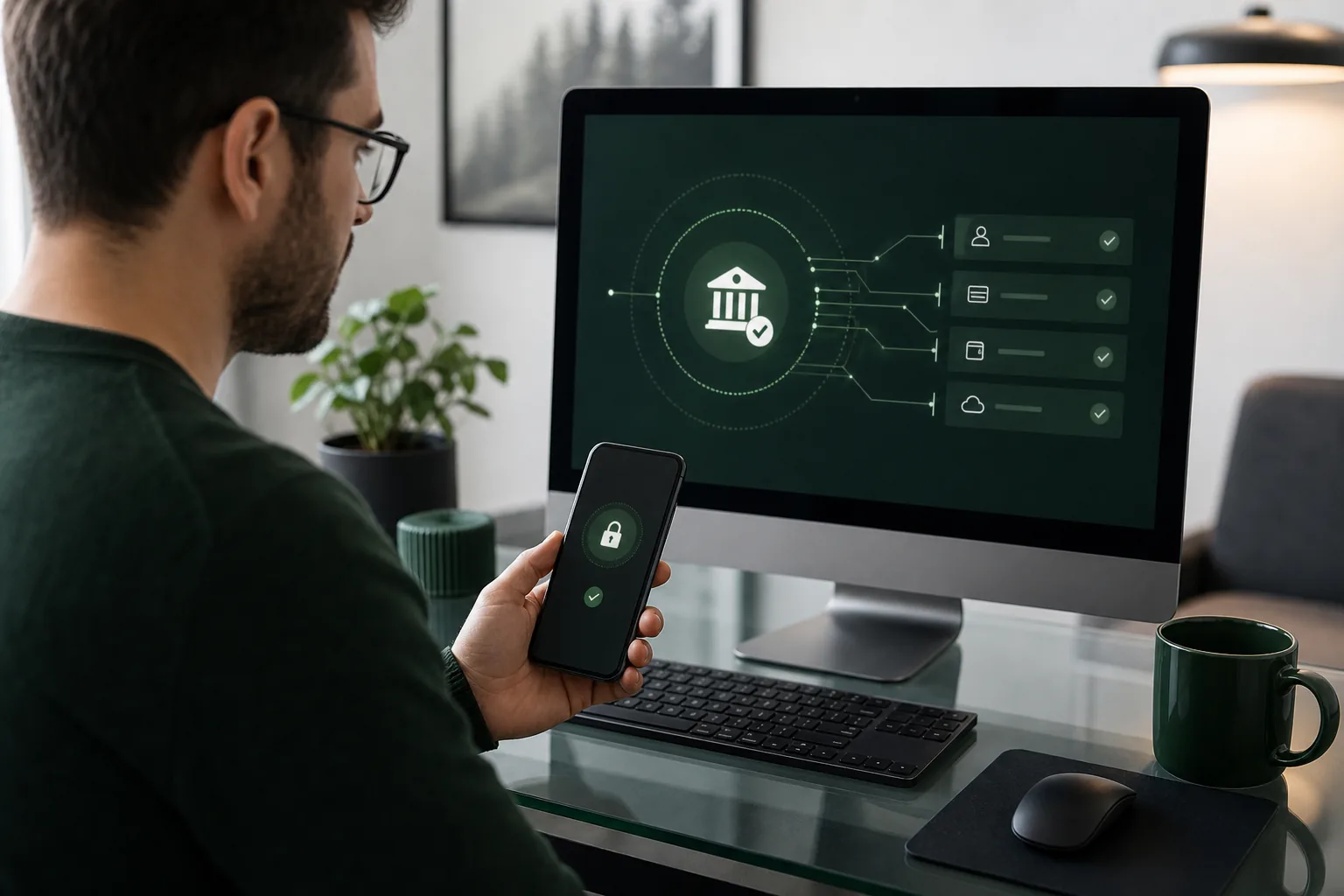
Connecting your bank account to a budgeting app like Klyrr through Plaid ensures your financial data is synced automatically without compromising security. Plaid uses encryption to safeguard your data, and Klyrr never sees your bank password. This secure connection allows you to access up to 24 months of transaction history, giving you a comprehensive view of your spending habits without the hassle of manual entry. According to Canada.ca, having a clear picture of your finances is crucial for creating a realistic budget.
b. The Convenience of Automatic Sync
Imagine you've just spent $85 on a grocery run at Loblaws in Toronto. Instead of saving the receipt and manually entering the amount into a spreadsheet, the synced budgeting app automatically logs this expense under your "Groceries" category. This real-time tracking helps prevent overspending and keeps your budget accurate. The FCAC emphasizes the importance of regularly tracking expenses to ensure financial health, which becomes effortless with automatic sync.
c. Complementing with Receipt Snapping
For cash purchases or when you prefer not to connect your bank account, snapping receipts at checkout can fill the gaps. For instance, if you spend $62 on gas at Petro-Canada, snapping a photo of the receipt ensures it’s logged in your budget. This method complements bank transaction sync by capturing expenses that might otherwise be missed, especially if you're dealing with cash spending. Learn more about how to master cash spending tracking in Canada with Klyrr's guide.
d. Real CAD Savings Examples
Let's consider a typical Canadian household. By syncing your bank account, you discover you're spending $250 monthly on dining out. With this insight, you decide to cut back by $50 a month, redirecting that money to your TFSA (CELI) instead. Over the year, this simple adjustment saves you $600, which can grow tax-free in your TFSA. This aligns with advice from the Bank of Canada on using savings to buffer against inflation's impact on purchasing power.
e. Avoiding Common Mistakes
A common mistake when using a budget app is ignoring the categories that need the most attention. For instance, subscriptions can often be overlooked. By connecting your bank account, you can identify recurring charges and decide if they're truly necessary. This awareness can lead to significant savings over time. As highlighted by TD Bank, reviewing your subscriptions is a crucial step in managing your budget effectively.
f. Discussing Shared Spending
For couples, discussing shared spending is vital for financial harmony. Questions like "How do we prioritize our spending?" or "What are our joint financial goals?" can guide these conversations. By syncing accounts, couples can view their combined expenses, making it easier to align on priorities and avoid misunderstandings. This collaborative approach is supported by RBC's advice on managing money as a couple.
g. How Klyrr Helps
Klyrr simplifies budgeting by offering tools that cater to Canadian households. Its secure sync via Plaid, combined with features like receipt snapping and an AI assistant, provides a holistic view of your finances. For quick financial questions, Chat Klyrr offers a public Canadian personal-finance AI chat, while signing up for Klyrr provides access to advanced features like bank sync and family budgeting tools. Discover how easy it is to stay on top of your finances by signing up for Klyrr today.
6. Next-dollar Priorities, Habits, and a Week-by-Week Plan (Part 2)
a. Understanding Your Next-Dollar Priorities
When managing personal finances, understanding where your next dollar should go is crucial. This approach helps in prioritizing spending and investments, ensuring that every dollar is used effectively. For many Canadians, the first step is to secure an emergency fund, followed by paying off high-interest debts. The Financial Consumer Agency of Canada emphasizes the importance of these steps as foundational to any financial plan.
After establishing these basics, Canadians should look at capturing free money, such as employer matches on RRSPs (REERs) or government grants like the CESG (SCEE) for RESPs (REEEs). This strategy ensures that you're not leaving money on the table, which can significantly enhance your financial health.
b. Building Habits for Consistent Budgeting
The habit of checking your financial health weekly can make a significant difference. Start by reviewing your spending categories and see how they align with your budget. For instance, if you notice your grocery spending is creeping up, consider meal planning to save money. A typical $85 grocery run could be optimized by looking for sales or buying in bulk, which are practical steps to reduce expenses.
Similarly, if your $62 gas fill-up is more frequent than anticipated, consider carpooling or using public transit to cut costs. These small adjustments can add up over time, freeing up funds for savings or investments.
c. Week-by-Week Financial Plan
Week 1: Secure and Plan
Begin with securing your financial data by connecting your Canadian bank account for automatic sync. This step not only saves time but also ensures accuracy in your budgeting. Services like Plaid enable this connection securely without sharing your bank passwords with apps, as recommended by the Bank of Canada.
Week 2: Review and Adjust
Spend the second week reviewing your spending patterns. Use a budget app to categorize your transactions, and adjust your budget as necessary. This is where receipt snapping complements bank sync, as it captures cash spending that might otherwise go untracked.
Week 3: Prioritize Next-Dollar Moves
This week, focus on your next-dollar priorities. Decide if additional funds should go towards debt reduction, an RESP (REEE) contribution for your children, or increasing your TFSA (CELI) contributions. Consider how inflation affects your spending power and adjust your priorities accordingly.
Week 4: Reflect and Plan Ahead
Finally, reflect on the month's financial activities. Discuss with your partner about shared spending goals and adjustments needed for the upcoming month. This discussion can prevent common budgeting mistakes and ensure both parties are aligned on financial goals.
d. Real-Life CAD Examples
Using real examples can clarify how budgeting adjustments impact your finances. Consider a family that saves $20 per week on groceries by price matching and reducing waste. Over a year, that’s a $1,040 savings, which could be redirected into a TFSA (CELI) or RESP (REEE), maximizing the CESG (SCEE) for their children’s education.
Similarly, identifying and canceling a forgotten $10/month subscription saves $120 annually. This amount could contribute towards a debt repayment plan, reducing interest costs and accelerating financial freedom.
e. Tools and Resources for Better Budgeting
For Canadians seeking free tools after Mint’s shutdown, platforms like Klyrr offer alternatives with features to simplify budgeting. Klyrr's Chat Klyrr provides a public AI assistant for quick financial questions, while the in-app assistant offers personalized advice based on your transactions. This dual approach allows users to access immediate guidance and deeper insights tailored to their financial data.
By integrating these strategies and tools, Canadians can enhance their financial literacy and achieve greater control over their finances, making the most of every dollar earned.
7. English + French Terms Canadians Search (TFSA/CELI, RRSP/REER, FHSA/CELIAPP)
Navigating the world of Canadian finance can sometimes feel like decoding a complex puzzle, especially when it comes to understanding bilingual terms such as TFSA (CELI), RRSP (REER), and FHSA (CELIAPP). These terms are crucial for Canadians looking to maximize their savings and investment strategies, and knowing them in both English and French can be especially helpful for francophone Canadians or those living in bilingual households.
a. The Importance of Bilingual Financial Literacy
In Canada, financial literacy extends beyond understanding basic budgeting; it encompasses a comprehensive grasp of various savings and investment vehicles available to Canadians. The Tax-Free Savings Account (TFSA) — or Compte d’épargne libre d’impôt (CELI) in French — is one such vehicle. Introduced in 2009, the TFSA allows Canadians to contribute after-tax dollars, with the benefit of tax-free growth on investments within the account. As of 2026, Canadians can contribute up to $7,000 annually, with a cumulative limit of $109,000 for those eligible since its inception. This flexibility makes the TFSA a versatile tool for both short-term savings and long-term investments.
Similarly, the Registered Retirement Savings Plan (RRSP), known as the Régime enregistré d’épargne-retraite (REER) in French, is designed to help Canadians save for retirement. Contributions to an RRSP are tax-deferred, meaning you won’t pay taxes on the money until it’s withdrawn, ideally during retirement when you may be in a lower tax bracket. The contribution limit for 2026 is 18% of your previous year's earned income, up to a maximum of $33,810.
The First Home Savings Account (FHSA), or Compte d’épargne libre d’impôt pour l’achat d’une première propriété (CELIAPP), is the newest addition to the Canadian financial landscape. It allows Canadians to save up to $8,000 annually, with a lifetime limit of $40,000, to purchase their first home. This account combines the benefits of a TFSA’s tax-free growth and an RRSP’s tax deductibility, making it an attractive option for aspiring homeowners.
b. How Connecting a Bank Account Enhances Financial Management
Connecting your Canadian bank account to a budget app like Klyrr can streamline the process of managing these accounts. By securely syncing your transactions via Plaid, you can automatically track your spending, contributions, and withdrawals. This means every purchase at Costco or Jean Coutu, whether it’s an $85 grocery run or a $62 gas fill-up, is immediately reflected in your financial dashboard. Such real-time tracking helps you stay on top of your TFSA, RRSP, and FHSA contributions, ensuring you maximize your benefits without the hassle of manual entries or end-of-month reconciliations.
The Financial Consumer Agency of Canada (FCAC) emphasizes the importance of budgeting tools that provide a clear picture of your financial health. Klyrr’s bank sync feature does just that by offering a seamless experience that captures every transaction and categorizes it, allowing you to focus on your financial goals rather than the minutiae of data entry.
c. Practical Steps for Bilingual Canadians
For bilingual Canadians, understanding and using these terms in both languages can enhance communication and financial planning. Whether you are discussing your CELI with a financial advisor in Québec or your TFSA with a bank representative in Ontario, fluency in both terms ensures clarity and precision. Tools like Klyrr, which offer full bilingual support, can be invaluable in bridging the language gap.
Moreover, as inflation affects purchasing power, keeping a close eye on your budget and adjusting your contributions to TFSA/RRSP/FHSA according to your financial situation becomes even more crucial. With Klyrr, you can easily monitor these changes and make informed decisions that align with your financial goals.
For those looking to dive deeper into personal finance management, Chat Klyrr is a public AI-powered tool available to answer your questions in both English and French. This can be especially helpful for Canadians who are just starting out on their financial journey or for those who have specific queries about their savings accounts. For a more personalized experience, Klyrr's in-app assistant provides context-aware advice using your transaction data once you sign up. You can sign up here to explore these features and take control of your finances.
8. Bank Sync, Receipt Snap, and Why Spreadsheets Fail
a. Understanding the Power of Bank Sync
In the realm of budgeting, connecting your Canadian bank account can be a game-changer. By leveraging secure platforms like Plaid, Canadians can seamlessly sync their bank accounts and credit cards with budgeting apps, ensuring all transactions are captured without the need to share passwords. This automatic daily sync offers a real-time view of your finances, capturing every coffee purchase, subscription service, and grocery run without the manual hassle of entering data into spreadsheets. According to the Financial Consumer Agency of Canada, having a clear picture of your finances helps in making informed decisions and sticking to your budget.
b. Why Spreadsheets Often Fall Short
While spreadsheets have been a traditional tool for budgeting, they often require significant time and effort to maintain. Month-end bank export panic is a common scenario where users scramble to update their records, often missing transactions or categorizing them incorrectly. This approach can lead to inaccuracies and a skewed understanding of one's financial health. With inflation affecting household costs, as noted by the Bank of Canada, having an up-to-date and precise financial overview is crucial. Real-time bank sync eliminates these issues by providing an automated, accurate picture of your spending.
c. The Role of Receipt Snap in Tracking Cash Spending
Even with a bank sync, cash transactions can slip through the cracks. This is where receipt snapping comes into play. By photographing receipts immediately after a purchase, whether at a grocery store or gas station, you ensure that every dollar is accounted for. For example, snapping a receipt for an $85 grocery run or a $62 gas fill-up instantly updates your budgeting dashboard, allowing you to see exactly where your money is going. This habit, combined with bank sync, provides a comprehensive view of both digital and cash spending, making budgeting more effective.
d. Practical Steps for Busy Parents
For busy parents in cities like Toronto or Montréal, integrating bank sync and receipt snapping into your routine can simplify budgeting. Start by connecting your bank account through a trusted app that uses secure sync via Plaid, capturing up to 24 months of transaction history. Complement this by snapping receipts at checkout to track cash expenses. This dual approach not only saves time but also ensures that no spending goes unnoticed, helping families stick to their budgets and make informed financial decisions.
e. How Klyrr Helps
Klyrr is designed to make budgeting easy and effective for Canadian households. By connecting your bank through Plaid, Klyrr automatically syncs transactions, providing a real-time view of your spending. The app also allows you to snap receipts for cash purchases, ensuring you don't miss any expenses. For quick financial questions, you can use Chat Klyrr, a public Canadian personal-finance AI, available in both English and French. For a deeper dive into your finances, you can sign up for Klyrr to access features like budgets and family financial tools. Whether you're a busy parent or a young professional, Klyrr offers the tools you need to see where your money goes and make every dollar count.
9. What to do today, this week, and this month
Connecting your Canadian bank account to a budget app can help transform your financial habits and provide clarity in your spending. Here’s an action plan to make sure you maximize the benefits of this connection and ensure your budgeting efforts stick.
a. Today: Connect Your Bank Account
Start by connecting your Canadian bank account to a trusted budgeting app like Klyrr. This will allow you to automatically sync your transactions, giving you a comprehensive view of your spending without the need for manual data entry. With secure connections via Plaid, you can link accounts from major banks like TD, RBC, and Scotiabank without sharing your passwords with the app. This step is crucial for setting up a foundation where every coffee, subscription, and card charge is automatically captured. For more on how this works, visit Plaid’s website.
Once your accounts are connected, begin snapping receipts for any cash purchases. This habit complements bank transaction sync and ensures that no expense is unaccounted for, especially at places like Tim Hortons or Dollarama where cash might still be king.
b. This Week: Analyze and Set Goals
With your transactions synced, spend this week analyzing your spending habits. Look at categories where your spending is higher than expected — perhaps groceries at Loblaws or gas at Petro-Canada. The Financial Consumer Agency of Canada provides excellent resources for understanding typical Canadian spending trends which can serve as a benchmark.
Set realistic goals based on your current financial situation. For instance, if you find you’re spending $85 on each grocery run, see if there’s room to cut back by planning meals and shopping more strategically. Consider setting a budget limit for categories like dining out or entertainment, and use the app’s AI assistant to receive tailored advice on how to meet these goals.
c. This Month: Review and Adjust
As the month progresses, review your budget weekly to ensure you’re staying on track. Use the insights from receipt snapping and bank sync to adjust your spending or budget categories as needed. This proactive approach prevents the end-of-month panic often associated with traditional spreadsheet budgeting.
Discuss your financial plans with your partner or family. Open conversations about shared expenses can lead to better financial harmony. For example, ask each other about priorities: “Is saving for a vacation more important than dining out weekly?” These discussions can help align your goals and spending habits.
Consider inflation’s impact on your budget categories. The Bank of Canada offers insights into how inflation affects household costs, which can help you understand necessary adjustments to maintain your purchasing power.
Finally, explore Klyrr’s budgeting features that offer personalized insights and recommendations. By the end of the month, you’ll have a clearer picture of your financial health and the tools to make informed decisions moving forward.
For any questions or additional guidance, use Chat Klyrr, the public Canadian personal-finance AI, to get educational advice tailored to your situation. This free tool complements the in-app assistant by offering quick answers before you fully commit to syncing all your finances. Sign up today to take full advantage of Klyrr’s features and start making every dollar work for you.
10. Ten Detailed Questions Canadians Actually Ask
a. How Can I Securely Connect My Canadian Bank Account to a Budget App?
Connecting your Canadian bank account to a budget app securely is crucial for managing your finances without compromising your privacy. Using platforms like Plaid allows you to connect your bank or credit card without sharing your password with the app itself. This method is endorsed by many Canadian banks, including TD, RBC, and Scotiabank, ensuring a seamless and secure synchronization of your transaction history. Learn more about secure connections.
b. What Are the Benefits of Using a Budget App with Bank Sync?
Linking your bank account to a budgeting app provides a real-time view of your spending, helping you track every dollar efficiently. Unlike manual spreadsheet methods, bank sync captures every transaction, including those small coffee purchases you might forget. The Bank of Canada emphasizes the importance of accurate financial tracking, especially in times of inflation when every dollar counts. Explore the impact of inflation.
c. How Does Klyrr Help with Budgeting for Canadian Families?
Klyrr offers an intuitive way to manage family finances by allowing users to connect their bank accounts for automatic updates. This makes it easier for busy parents to see where their money goes and adjust their spending habits accordingly. Additionally, Klyrr features tools for snapping receipts and manually entering cash transactions, ensuring no expense is missed. For more detailed budgeting assistance, try Chat Klyrr or sign up for Klyrr's full features.
d. What Are Common Mistakes to Avoid When Using a Budget App?
One of the biggest mistakes is not regularly checking your budget app, leading to outdated information. Another is ignoring small transactions, which can add up over time. Ensure you review your app frequently and account for all spending, including cash transactions. Using apps that allow secure bank connections, like Klyrr, can help eliminate these errors by providing real-time updates and reminders.
e. How Does Receipt Snapping Complement Bank Transaction Sync?
Receipt snapping is an excellent way to capture cash transactions that don't automatically sync with your bank account. For instance, if you pay $85 in cash for groceries, snapping a photo of the receipt ensures this expense is recorded. This method complements bank transaction sync by covering all bases, ensuring a comprehensive view of your spending habits.
f. How Do TD, RBC, and Other Major Banks Advise on Budget Apps?
Major Canadian banks like TD and RBC advise their customers to use budget apps that offer secure bank connections. These banks recognize the value of budgeting apps in providing a clear picture of a customer's financial situation and encourage using tools that sync transactions automatically to avoid manual errors. Check out RBC's advice for more insights.
g. What Steps Can a Busy Parent in Toronto or Montréal Take This Week?
A busy parent can start by connecting their bank account to a budget app like Klyrr to automate transaction tracking. Next, they can snap receipts for cash purchases, like a $62 gas fill-up, and review the app's dashboard weekly to adjust their spending patterns. This habit ensures they stay on top of their finances without spending hours on manual budgeting.
h. How Does Inflation Affect Budgeting in Canada?
Inflation increases the cost of living, making it essential to adjust your budget accordingly. With rising prices, Canadians might find their usual grocery or gas expenses increasing, necessitating a more detailed budget review. The Bank of Canada provides resources to understand inflation's impact on household budgets.
i. What Free Tools Are Available for Canadians After Mint Shut Down?
After Mint's shutdown, Canadians have been searching for reliable alternatives. Klyrr offers a free tier that includes secure bank connections, receipt snapping, and AI-driven budgeting advice. These features provide a comprehensive toolset for managing personal finances without the need for complicated spreadsheets. Discover more about Klyrr.
j. What Questions Should Couples Ask About Shared Spending?
Couples should discuss their financial goals, like saving for a home or planning a vacation, and decide how much each partner will contribute. They should also agree on spending limits for discretionary categories like dining out or entertainment and review their shared budget regularly to ensure alignment. This dialogue helps prevent misunderstandings and promotes financial harmony.
11. Secure bank connect, Chat Klyrr, AI insights, and your free next step
a. Streamline Your Budget with Secure Bank Connection
Connecting your bank account is a game-changer for budgeting in Canada. By using a secure platform like Plaid, Canadians can link their accounts without sharing passwords, ensuring privacy and security. This connection allows apps like Klyrr to automatically sync transactions from major Canadian banks such as TD, RBC, Scotiabank, BMO, and CIBC. This eliminates the tedious task of manual entry, providing a comprehensive view of your finances. According to the Financial Consumer Agency of Canada, a clear and accurate budget is crucial for financial success. With bank sync, you see every transaction, making it easier to stick to your budget and avoid overspending.
b. Enhance Your Financial Understanding with Chat Klyrr
For those times when you have a quick financial question or need guidance, Chat Klyrr is your go-to resource. This public, bilingual AI chat service offers educational support to Canadians, helping them navigate personal finance queries without delving into complex tax or legal advice. Whether you're curious about how inflation might impact your budget or need tips on managing debt, Chat Klyrr is there to assist. It's important to note that Chat Klyrr is distinct from Klyrr's in-app AI assistant, which provides personalized advice based on your specific transactions and financial history.
c. Gain Valuable Insights with Klyrr's AI Assistant
Klyrr's in-app AI assistant takes financial management a step further by offering insights tailored to your unique spending patterns. Once your bank account is connected, the assistant analyzes your transactions, categorizes expenses, and highlights areas where you can save. For instance, if your monthly grocery spending at Costco or Loblaws exceeds your budget, the AI will alert you, suggesting actionable steps to rein in those costs. This proactive approach helps you make informed decisions and adjust your spending habits accordingly.
d. Your Next Step: Try Klyrr for Free
Ready to take control of your finances? Start by signing up for Klyrr here. The app's free tier offers robust features, including secure bank connection, receipt snapping, and AI-driven insights, without requiring a credit card. With Klyrr, you can visualize your financial landscape, set realistic budgets, and track your spending effortlessly.
By integrating these tools into your financial routine, you're not just managing money—you're mastering it. And should you need quick advice before committing to the app, remember that Chat Klyrr is available to answer your preliminary questions. With Klyrr, you have the support you need to make budgeting stick.
12. Quick comparison: old way vs Klyrr way
| Approach | Effort | Real-time clarity | Family sharing | Cost |
|---|---|---|---|---|
| Spreadsheet only | High — manual entry | No — weeks behind | Difficult | Free but time-consuming |
| Bank app only | Low | Partial — categories limited | Rare | Free |
| Snap receipts + Klyrr | Low — photo at checkout | Yes — same day | Built-in shared files | Free tier |